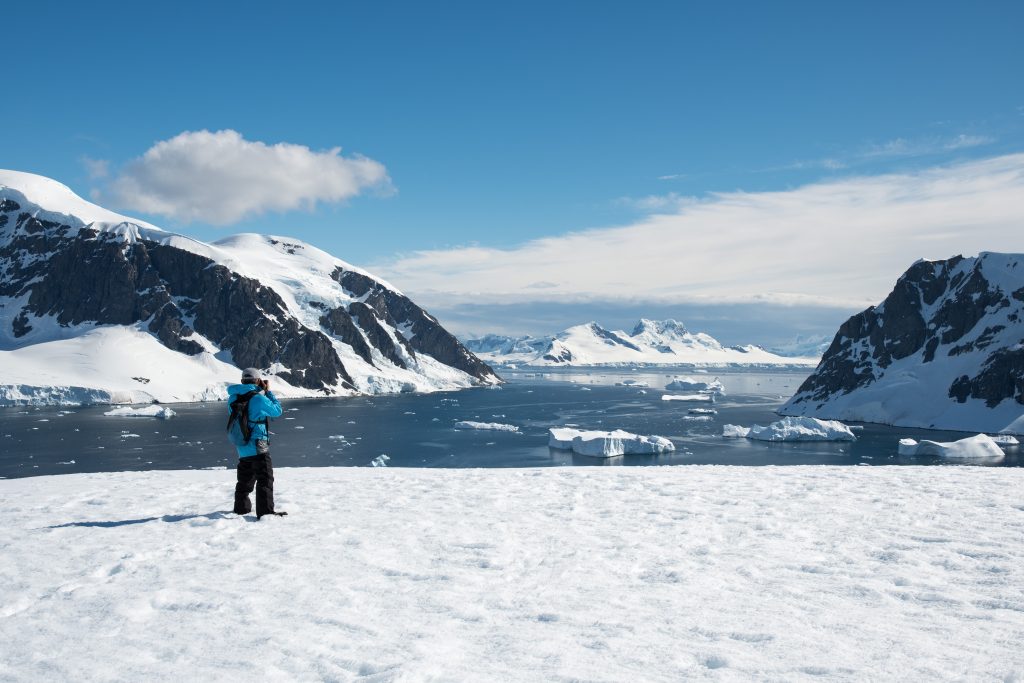


Voyage Overview
Venture far below the Antarctic Circle on this in-depth small ship exploration voyage.
This adventurous expedition offers a unique opportunity to discover very rarely visited places, deep South along the coast of Antarctica to the Bellingshausen Sea, along the coast of Ellsworth Land and even to Peter I Island.
Trip Details

Duration: 25 Days

Ship: Ortelius, Expedition Ship, 108 Guests

Start: Ushuaia, Argentina
End: Ushuaia, Argentina
Highlights:
- 17 planned days in Antarctica
- Helicopter Tours: take flight above the breathtaking Antarctic wilderness, visiting locations inaccessible by any other means (conditions permitting)
- Spotting multiple species of whales from the zodiacs or on deck of the ship
- Visiting some of the most remote locations on earth, where few other ships go
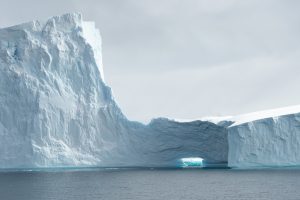
- Sailing past incredible icebergs and into the sea ice
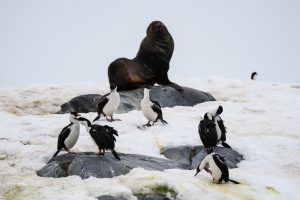
- Walking on shore to watch gentoo, chinstrap and/or adélie penguins
- Exploring old research stations

Trip Itinerary Overview:
Day 1: Embarkation in Ushuaia, Argentina
Days 2-3: Drake Passage
Days 4-6: Antarctic Peninsula
Day 7: Flandres Bay and Renard Island
Days 8-11: Crossing the Antarctic Circle
Days 12-14: Marguerite Bay
Days 15-18: Bellingshausen Sea
Days 19-20: Peter I Island
Days 21-24: Northbound across the Drake Passage
Day 25: Disembark in Ushuaia, Argentina





Tour Dates
- October 2026 to March 2027
| Dates | Availability | |
|---|---|---|
Jan 14 – Feb 7, 2027 (25 days) | Available | view pricing chart |
Itinerary
Day 1: Embarkation in Ushuaia, Argentina
Your voyage begins where the world drops off. Ushuaia, Argentina, reputed to be the southernmost city on the planet, is located on the far southern tip of South America. Starting in the afternoon, you embark from this small resort town on Tierra del Fuego, nicknamed “The End of the World,” and sail the mountain-fringed Beagle Channel for the remainder of the evening.
Day 2 – 3: Sailing the Drake Passage
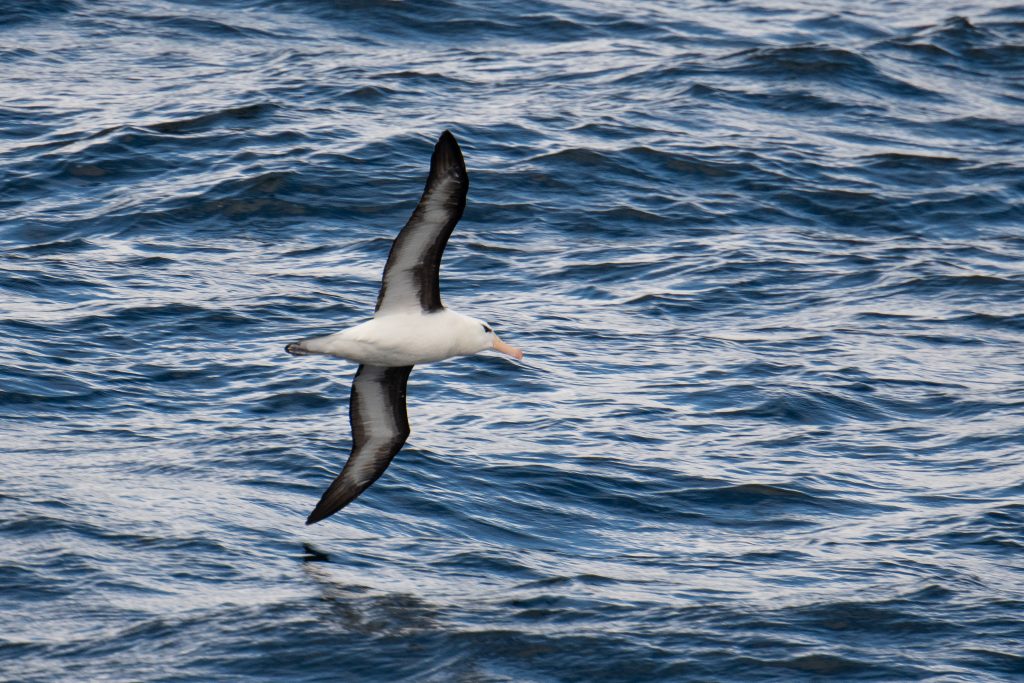
Over the next two days on the Drake Passage, you enjoy some of the same experiences encountered by the great polar explorers who first charted these regions: cool salt breezes, rolling seas, maybe even a fin whale spouting up sea spray. After passing the Antarctic Convergence – Antarctica’s natural boundary, formed when north-flowing cold waters collide with warmer sub-Antarctic seas – you are in the circum-Antarctic upwelling zone. Not only does the marine life change, the avian life changes too. Wandering albatrosses, grey-headed albatrosses, black-browed albatrosses, light-mantled sooty albatrosses, cape pigeons, southern fulmars, Wilson’s storm petrels, blue petrels, and Antarctic petrels are a few of the birds you might see.
Day 4 – 6: Antarctic Peninsula
Following in the footsteps of the famous Belgian explorer Adrien de Gerlache, we hope to land at Auguste Island, which was also the first landing site of the expedition team aboard Belgica during their 1898 expedition. Another possible landing is Hydrurga Rocks, a small group of islets located east of the much larger Two Hummock Island. Hydrurga Rocks offers a chance to spot Adélie and chinstrap penguins, as well as Weddell seals, leopard seals, and southern elephant seals. Occasionally, humpback whales and Antarctic minke whales may also be seen in the surrounding waters.
As we continue exploring the Antarctic Peninsula, heading south, we may visit some of the following locations:
Charlotte Bay – where we hope to make our first continental landing at Portal Point.
Cuverville Island – A small, precipitous island nestled between the mountains of the Antarctic Peninsula and Rongé Island, Cuverville is home to a large colony of gentoo penguins and breeding pairs of brown skuas.
Danco Island – Activities here may focus on the gentoo penguins nesting on the island, along with the Weddell and crabeater seals that can be found nearby.
Day 7: Flandres Bay and Renard Island
We arrive at Flandres Bay, where we hope to land at Renard Island. Renard Island is a steep and rugged island, named after Alphonse Renard, one of the major scientific backers of Adrien de Gerlache’s expedition. It was noted as the final landing site of the expedition vessel Belgica along the west coast of the Antarctic Peninsula.
Day 8 – 11: Crossing the Antarctic Circle
Crossing the Antarctic Circle, we arrive in the stunning area of Crystal Sound, where we hope to see a range of Antarctic wildlife and witness the sheer scale of the Antarctic landscape, with its vast expanses of ice and towering mountains. If conditions allow, we will land on Detaille Island, a listed historic monument and former research station. The station remains as it was left, offering a rare glimpse into the early days of scientific research in Antarctica, set against breathtaking scenery.
Pourquoi-Pas Island / Horseshoe Island
A visit to one or both of these islands further deepens our appreciation of the pioneering expeditions of the past. Pourquoi-Pas Island, named by the famous explorer and scientist Jean-Baptiste Charcot, is often home to penguins and seals. It offers a hike ashore and the opportunity to see glaciers that shape the island’s topography.
Horseshoe Island is also home to an abandoned research base, where the “Mary Celeste”-like buildings provide an insight into a bygone era of scientific exploration. This was a site of pioneering research and long-distance expeditions using dog teams, and the remains of the kennels can still be seen. This island is a favorite among our staff and guests, offering breathtaking views of the vast landscapes and harsh conditions that once served as home for researchers. The landscape of Horseshoe Island never disappoints.
Stonington Island
A site of significant research activity from the 1930s to the 1970s, Stonington Island was home to both American and British research bases. It features a range of historic buildings and artifacts, telling the story of Antarctic exploration. Once connected to the Antarctic mainland by snow and ice, this sobering site now stands as a powerful reminder of Antarctica’s remoteness and its delicate balance between human history and untamed wilderness. The wildlife, vast natural beauty, and man-made structures combine to make this an unforgettable place, sure to leave a lasting impression.
Red Rock Ridge
A landing site on the Antarctic mainland, Red Rock Ridge is visible from some distance, with its striking red-hued rocks standing out against the icy backdrop. If conditions are favorable, we will attempt a landing here. Adélie penguins have a breeding colony in the area, and we also hope to see seals and Antarctic shags, which nest nearby.
Day 12 – 14: Continuing southward through Marguerite Bay
As the ship heads farther south, we will keep a keen watch for the giants of the sea, as well as some lesser-seen wildlife, such as the elusive Ross seal. We are now entering a region of true exploration, where few have ventured before.
Day 15 – 18: Entering the Bellingshausen Sea
We hope to enter the Ronne Entrance, an area first recorded during the aerial flights of Lincoln Ellsworth and later charted by the British Graham Land Expedition. This remote region is rarely visited, and we will aim to land in one of the world’s most isolated places, using either Zodiacs or helicopters. As ice and weather conditions can vary significantly, our Expedition Leader will determine the best options for activities in this area. Along Ellsworth Land, we will attempt to find a suitable landing site, either by Zodiac or helicopter. As always, this depends on weather conditions and will be decided by the Expedition Leader.
Day 19 – 20: A rare glimpse of Peter I Island
Known as Peter I Øy in Norwegian, this uninhabited volcanic island lies in the Bellingshausen Sea. It was discovered by Fabian von Bellingshausen in 1821 and named after Peter the Great of Russia. Though the island is claimed by Norway as its own territory, it is rarely visited by passenger vessels due to its remote and exposed nature. Landing here is challenging, but if weather and ice conditions permit, you may have the extraordinary opportunity to land via helicopter on the glaciated northern part of the island. This is a truly unique chance to set foot on one of the most remote islands in the world.
Day 21 – 24: Northward bound: From Peter I Island across the Drake Passage
After our unforgettable time exploring the remote and rarely visited Peter I Island, we set our course northward, leaving Antarctica behind as we sail across the Bellingshausen Sea and into the vast Southern Ocean. As the ship pushes through the Antarctic waters, our onboard experts will continue to host engaging lectures, covering topics such as the history of Antarctic exploration and marine ecosystems on this delicate environment. Wildlife remains a constant companion as we sail. Keep an eye out for wandering albatrosses gliding effortlessly above the waves, storm petrels skimming the water’s surface, and occasional sightings of whales—including humpbacks and possibly even blue whales—feasting in these nutrient-rich waters. The vast Drake Passage stretches before us, marking our final stretch before reaching South America. Over the following days on the Drake Passage, you enjoy some of the same experiences encountered by the great polar explorers who first charted these regions: cool salt breezes, rolling seas, maybe even a fin whale spouting up sea spray. After passing the Antarctic Convergence – Antarctica’s natural boundary, formed when north-flowing cold waters collide with warmer sub-Antarctic seas – you are in the circum-Antarctic upwelling zone. Wandering albatrosses, grey-headed albatrosses, black-browed albatrosses, light-mantled sooty albatrosses, cape pigeons, southern fulmars, Wilson’s storm petrels, blue petrels, and Antarctic petrels are a few of the birds you might see.
Day 25: Disembarkation in Ushuaia
Every adventure, no matter how grand, must eventually come to an end. It’s now time to disembark in Ushuaia, but with memories that will accompany you wherever your next adventure lies.
PLEASE NOTE: All itineraries are for guidance only. Programs may vary depending on ice, weather, and wildlife conditions. Landings are subject to site availabilities, permissions, and environmental concerns per IAATO regulations. Official sailing plans and landing slots are scheduled with IAATO prior to the start of the season, but the expedition leader determines the final plan. Flexibility is paramount for expedition cruises. The average cruising speed for our vessel is 10.5 knots.
Trips & Rates
Please note, rates are Per Person in USD
Availability & prices are subject to change at anytime
Jan 14 – Feb 7, 2027 (25 days)

| Start: | Ushuaia, Argentina |
| End: | Ushuaia, Argentina |
| Cabin Category | Quad Porthole | Triple Porthole | Twin Porthole | Twin Window | Twin Deluxe | Superior |
|---|---|---|---|---|---|---|
| Per Person Price in USD | $24,600 | $30,650 | $30,650 | $32,150 | $35,000 | $36,250 |
| Availability | Open | Full | Open | Open | Limited | Limited |
Voyage Ship
Ortelius
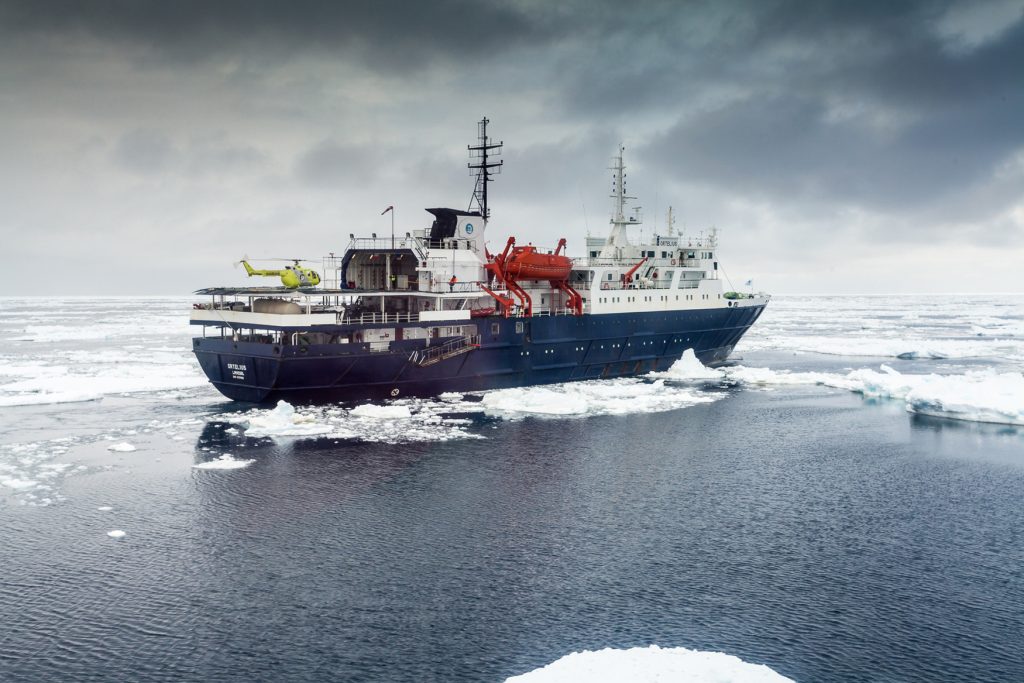
Ortelius was built in 1989 and originally served as a research vessel. She was later converted into an expedition cruise ship taking adventurous travelers to the Arctic & Antarctic. With the highest ice class, comfortable cabins, ample deck space and a maximum of just 108 guests, Ortelius is one of the most authentic small expedition cruise ships sailing in the Polar regions.
Ortelius Cabins & Deck Plan
Superior

DECK 5
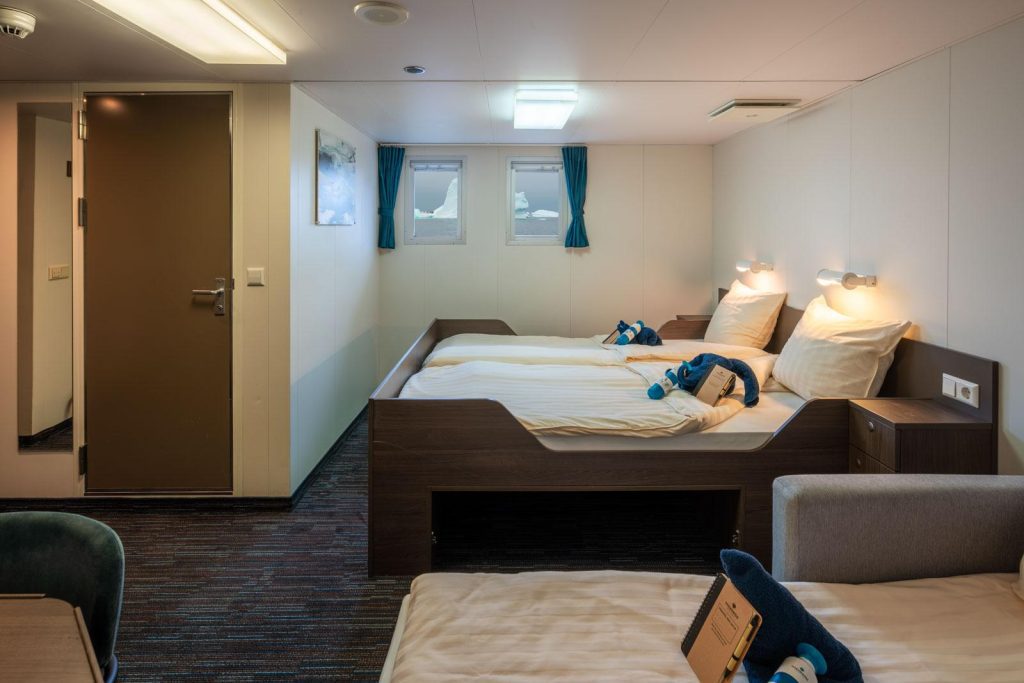
The 6 Superior cabins are the most spacious and the only cabin category with a double bed. They are all located on deck 5. Features: 2 windows (minimum), 1 double bed, 1 single (sofa) bed, Private shower & toilet, Desk & chair, Flatscreen TV, Telephone & WiFi (supplemented), Refrigerator, Coffee & tea maker, Hair dryer, Safe deposit box and Ample storage space.

198 – 220 sq. ft. (18.4 – 20.4m2)

1-3

1 double + single sofa bed
Twin Deluxe
DECK 5
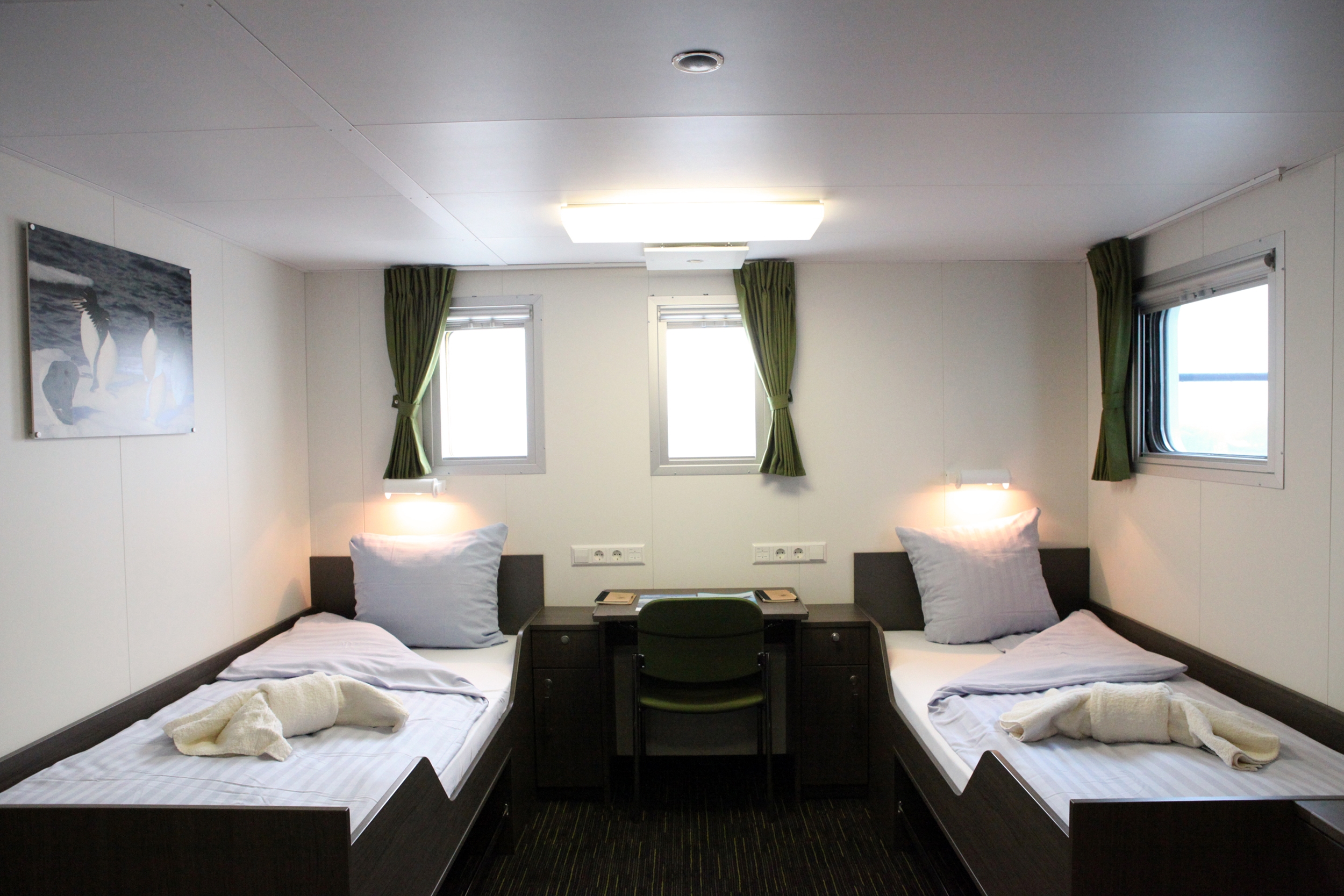
There are just 2 Twin Deluxe cabins located on deck 5. Features: 3 windows, 2 lower berths, Private shower & toilet, Desk & chair, Small sofa, Refrigerator, Coffee & tea maker, Flatscreen TV, Telephone & WiFi (supplemented), Hair dryer, Safe deposit box and Ample storage space.
190 sq. ft. (17.7 m2)
1-2
2 single
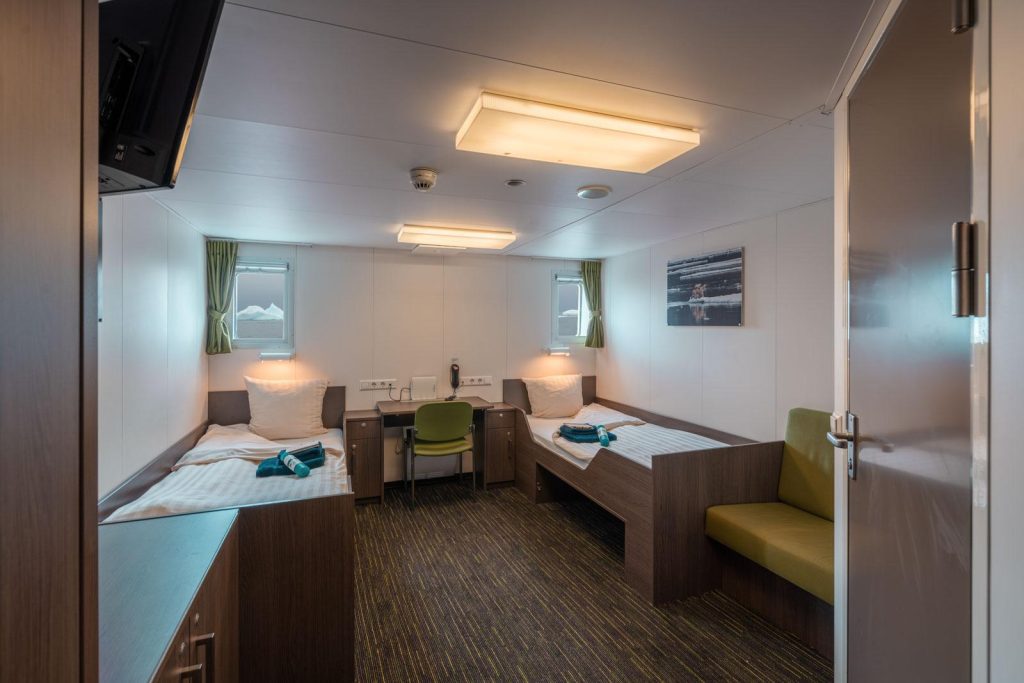
Twin Window
DECK 5
The 12 Twin Window cabins are all located on deck 5. Features: 2 windows, 2 lower berths, Private shower & toilet, Desk & chair, Flatscreen TV, Telephone & WiFi (supplemented), Hair dryer, Safe deposit box and Ample storage space.
188 – 190 sq. ft. (17.5 – 17.7 m2)
1-2
2 single
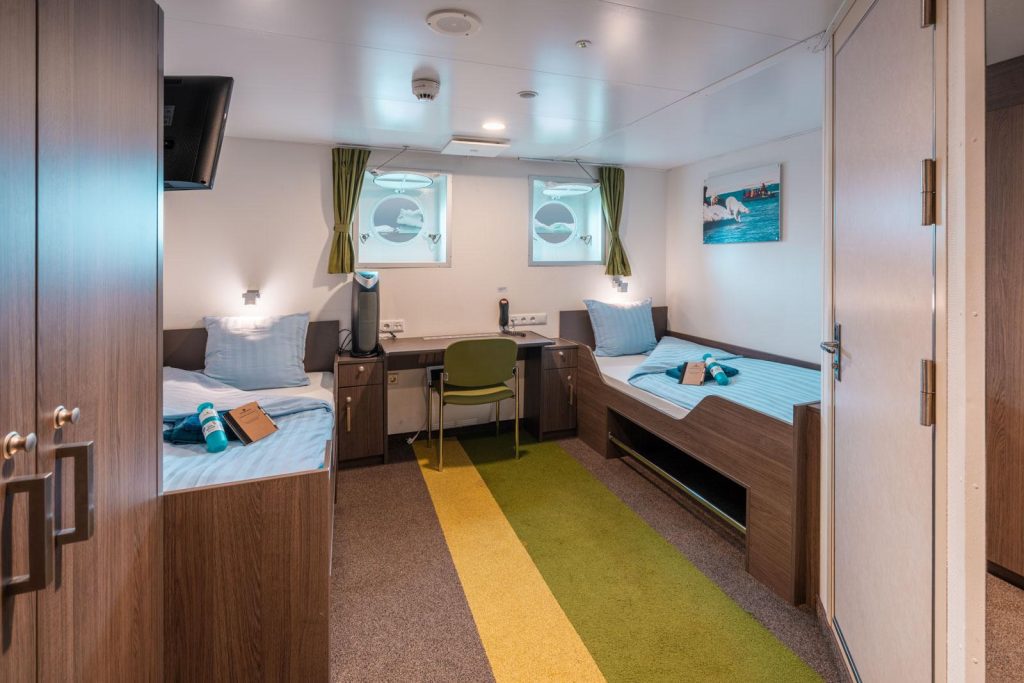
Twin Porthole
DECK 3
DECK 4
The most abundant cabin category, most of which are located on deck 4 (there are 2 on deck 3). Features: 2 portholes, 2 lower berths, Private shower & toilet, Desk & chair, Flatscreen TV, Telephone & WiFi (supplemented), Hair dryer, Safe deposit box and Ample storage space.
123 – 163 sq. ft. (11.4 – 15.1 m2)
1-2
2 single
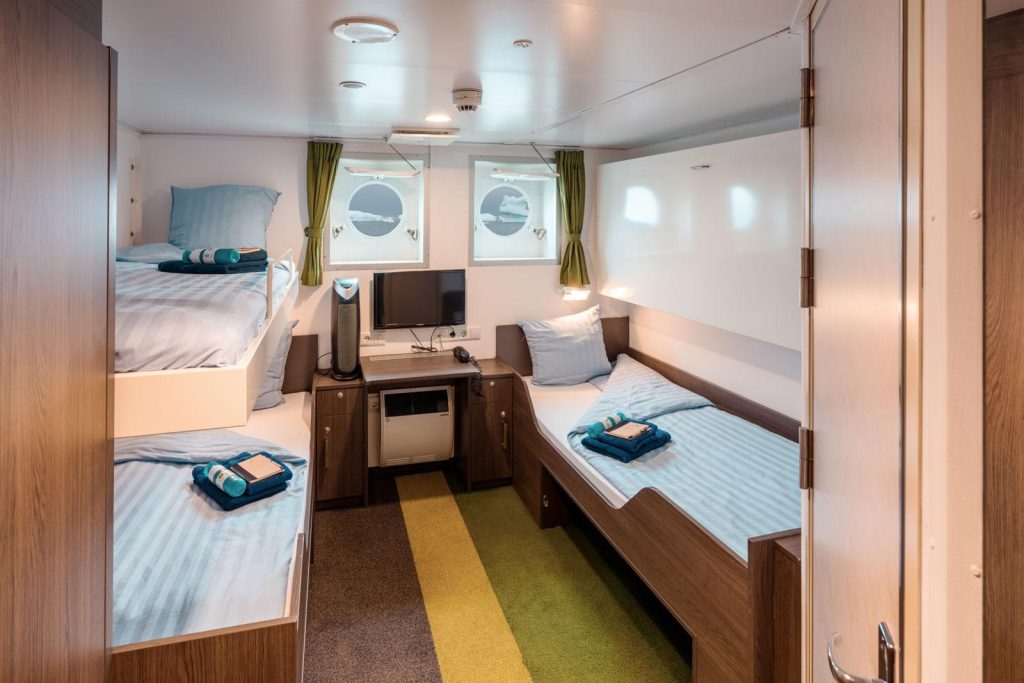
Triple Porthole
DECK 3
2 Triple cabins located forward on deck 3. Features: 2 portholes, 1 upper berth & 2 lower berths, Private shower & toilet, Desk & chair, Flatscreen TV, Telephone & WiFi (supplemented), Hair dryer, Safe deposit box and Ample storage space.
1-3
3 single
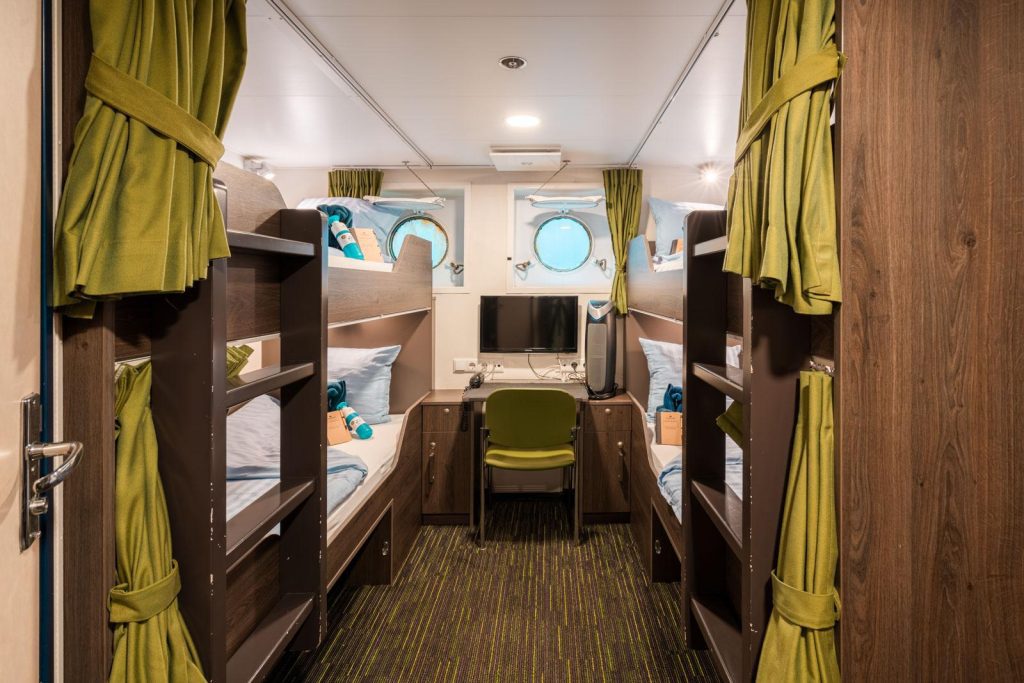
Quadruple Porthole
DECK 3
4 Quad cabins midship on deck 3. Features: 2 portholes, 2 upper berths & 2 lower berths, Private shower & toilet, Desk & chair, Flatscreen TV, Telephone & WiFi (supplemented), Hair dryer, Safe deposit box and Ample storage space.
133 – 152 sq. ft. (12.4 – 14.1 m2)
1-4
4 single
Inclusions/Exclusions
Inclusions:
- Voyage aboard the indicated vessel as indicated in the itinerary
- All meals throughout the voyage aboard the ship including snacks, coffee and tea.
- All shore excursions and activities throughout the voyage by Zodiac.
- Program of lectures by noted naturalists and leadership by experienced expedition staff.
- Free use of rubber boots and snowshoes.
- Luggage transfer from pick-up point to the vessel on the day of embarkation, in Ushuaia.
- Pre-scheduled group transfer from the vessel to the airport in Ushuaia (directly after disembarkation).
- All miscellaneous service taxes and port charges throughout the programme.
- Comprehensive pre-departure material.
- Complimentary Wi-Fi connectivity. All guests receive 1.5 GB of data usage per day, which resets every 24 hours.
- Complimentary Dopper water bottle for use during and after your expedition.
Exclusions:
- Any airfare, whether on scheduled or charter flights
- Pre- and post- land arrangements.
- Passport and visa expenses.
- Government arrival and departure taxes.
- Meals ashore.
- Baggage, cancellation and personal insurance (which is strongly recommended).
- Excess baggage charges and all items of a personal nature such as laundry, bar, beverage charges and telecommunication charges.
- The customary gratuity at the end of the voyages for stewards and other service personnel aboard (guidelines will be provided).
Solo Travelers
Are you traveling alone? Solo travelers have the following options.
- Book into a share cabin in the following categories: Quad Porthole, Triple Porthole, Twin Porthole, Twin Window & Twin Deluxe
- Book a twin cabin at solo occupancy at 1.7x the per person share price